
Franchising Isn't Reserved For Large Companies. A Strong Franchise System Can Begin With One Proven New Zealand Business And A Model That Can Be Replicated.
One of the most common assumptions we hear from small business owners is that their business isn't big enough to franchise.
They imagine they need multiple branches, a large workforce, national brand recognition or years of expansion behind them before they can even consider it.
That isn't how franchising necessarily begins.
New Zealand is overwhelmingly a small-business economy. MBIE reports that small businesses account for around 97% of New Zealand enterprises and contribute approximately 42% of the country's total economic value.
That makes small businesses enormously important to the New Zealand economy.
And for some successful small businesses, franchising can provide a structure for taking what already works in one market and replicating it elsewhere.
One Business Can Contain A Replicable Model
Having multiple company-owned operations can provide valuable information before franchising.
It demonstrates how the model works across different locations, teams and customer markets.
But the number of existing locations isn't the only measure of franchise readiness.
A business with one established operation may already have developed something valuable.
It may have a proven customer base, reliable revenue, a strong reputation, efficient systems and a service that customers are requesting in other regions.
The question is whether those results can be separated from the individual founder.
Could somebody else be taught to generate customers, deliver the product or service and operate the business using the same system?
That is where the franchise conversation begins.
The System Is More Important Than The Size
Franchisees aren't simply paying to use a business name.
They are entering a business system.
For a small business, that system may represent years of accumulated knowledge.
The founder knows how to price the service, where customers come from, which suppliers to use, what equipment is required, how to schedule work, how to train people and how to maintain quality.
They may barely think about these things anymore because they have become part of everyday operations.
To a new business owner, however, that knowledge can be extremely valuable.
Instead of discovering everything through trial and error, the franchisee receives an established framework.
That is one of the fundamental ideas behind franchising.
The Founder's Knowledge Needs To Become Teachable
There is an important qualification.
A successful business is not automatically a franchisable business.
Sometimes a company works brilliantly because the owner is brilliant at running it.
Customers know them personally. They make all the sales. They solve every difficult problem. Important information exists in their head rather than within the business.
That creates founder dependence.
Franchise development needs to reduce that dependence.
The methods that produce the results need to be identified, documented and converted into procedures another person can follow.
Training needs to explain not only what the franchisee does, but how the business expects it to be done.
That process can itself be valuable for the original business because it forces the owner to identify what actually makes their operation work.
A Modern Franchise Doesn't Need A Corporate Head Office
A first-time franchisor may imagine they need an office full of employees before they can support franchisees.
Usually, what matters is capability rather than appearance.
Can the franchisor provide effective initial training?
Can franchisees access the systems and information they need?
Can enquiries and customer marketing be managed effectively?
Can the franchisor monitor standards and performance?
Can franchisees receive support when problems arise?
Modern technology makes many of these functions easier for small organisations.
MBIE has continued to encourage greater digital capability among New Zealand small businesses, including launching AI-enabled business support tools in 2026 as part of its work to improve productivity and business capability.
CRM systems, online training, cloud-based manuals, accounting integrations, scheduling software and digital communication platforms can allow an emerging network to operate efficiently without unnecessary head-office infrastructure.
The support structure can then expand as the franchise network expands.
The Numbers Still Have To Work
Franchise readiness isn't only about operations.
The commercial model needs careful assessment.
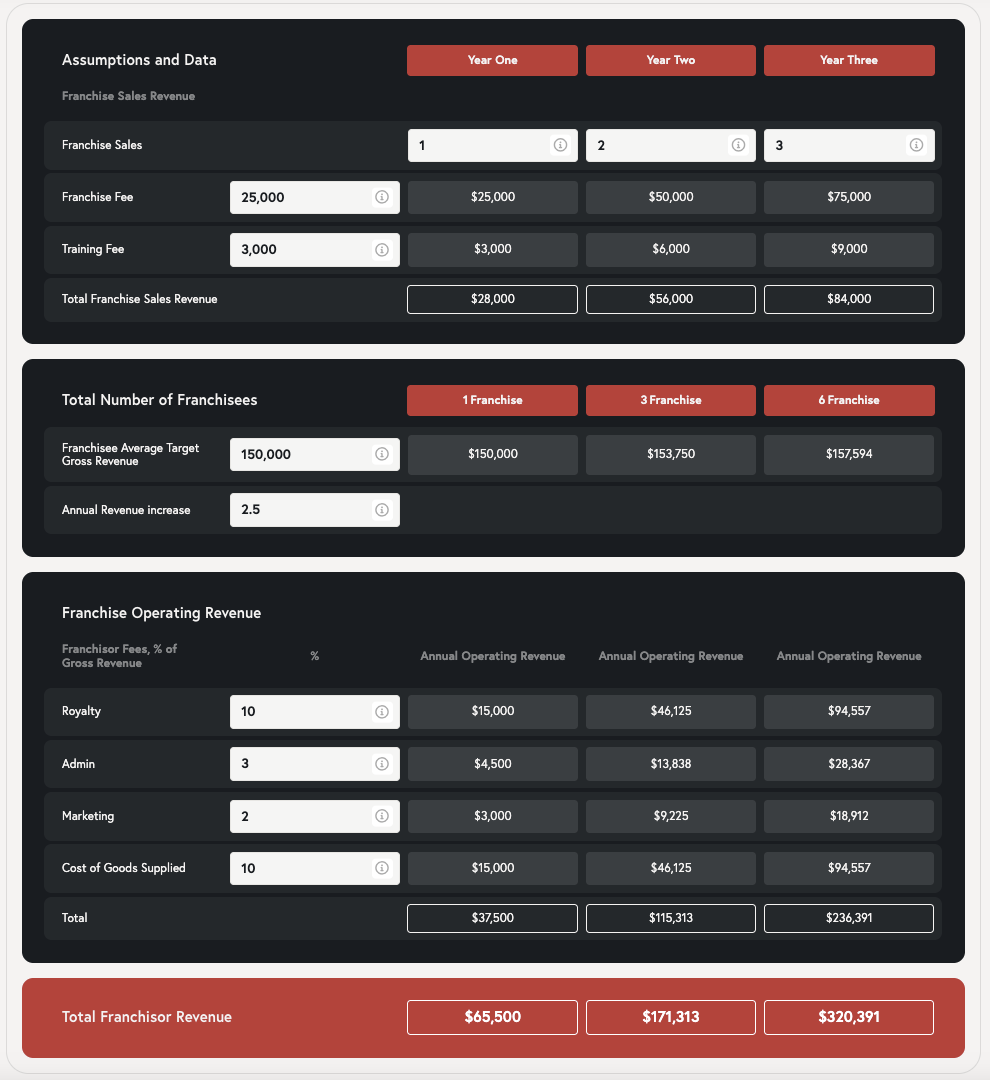
A franchisee will have costs that differ from those of the original business. Franchise fees, ongoing fees, marketing contributions, technology and other network costs all need to be incorporated into the model.
The franchisor also needs sufficient income over time to provide the support, systems, marketing and network management franchisees have been promised.
That is why franchise financial modelling matters before an opportunity is launched.
A successful original business is the starting point.
The next question is whether that business still makes commercial sense when converted into a franchise structure.
Small Networks Can Grow Deliberately
A new franchisor does not have to attempt national expansion immediately.
For many emerging systems, deliberately recruiting the first few franchisees can be a sensible approach.
Those initial franchise partners provide something extremely valuable: evidence of how well the business system transfers from the founder to somebody else.
Questions will emerge.
Which parts of training need more explanation?
Where do franchisees need more support?
Which procedures seemed obvious to the founder but aren't obvious to somebody new?
Does the customer acquisition strategy transfer effectively into another territory?
This information can help strengthen the franchise system before broader expansion.
A small network therefore isn't necessarily a weakness.
It can be a stage of development.
New Zealand's Geography Makes Replication Particularly Interesting
For many successful New Zealand businesses, geographic expansion presents a practical challenge.
A business established in Auckland may see opportunities in Hamilton, Tauranga, Wellington or Christchurch.
A Christchurch business may know its service could work elsewhere in the South Island or nationally.
Opening company-owned operations requires the original business to provide the capital, recruit the staff and manage those locations itself.
Franchising provides a different structure.
A franchise partner invests in and operates the local business while using the established brand, systems and support of the franchisor.
That doesn't remove the franchisor's responsibility for the network, but it can reduce the need for the original owner to personally establish and operate every new territory.
For the right model, that can make geographic expansion much more achievable.
Being Small Doesn't Mean Being Unprepared
There is an important distinction between being a small franchisor and being an underprepared franchisor.
The first can work.
The second creates problems.
A small business entering franchising still needs appropriate franchise documentation, operating systems, training, commercial modelling, recruitment processes and support structures.
In New Zealand, franchising is not governed by a single franchise-specific statute equivalent to Australia's Franchising Code of Conduct. However, franchisors and franchisees remain subject to New Zealand's general commercial laws, including areas such as contract, fair trading, employment, intellectual property and competition law.
Members of the Franchise Association of New Zealand are also subject to its Code of Practice and Code of Ethics.
Proper professional advice and preparation therefore remain important regardless of the size of the business.
How Do You Know If Your Business Is Ready?
There isn't one number that answers this.
Turnover alone doesn't determine franchise readiness.
Neither does the number of employees.
Instead, look at the fundamentals.
Has the business operated successfully for long enough to demonstrate that the model works?
Does it have healthy underlying economics?
Is there demand for the product or service beyond the existing location?
Can the processes be documented?
Can another person be trained to operate it?
Does the brand or business system provide a genuine advantage compared with starting independently?
Can the franchisor support additional operators?
If several of those answers are yes, the business may be worth assessing for franchising.
If some are no, that doesn't necessarily mean franchising is off the table. It may simply identify what needs to be strengthened first.
You Don't Need To Look Like A Franchise Before You Become One
Many successful small businesses have already created the foundations of a franchise without realising it.
They have developed a strong local brand.
They know how to find customers.
They have established suppliers, systems and processes.
They have made mistakes, learned from them and refined how the business operates.
Most importantly, they have built something that works.
Franchise development is about taking that knowledge and turning it into a model another owner can reproduce.
That requires planning, investment and a willingness to move from being simply a business operator to supporting a network of business owners.
But it does not require you to already operate a large company.
For the right New Zealand small business, franchising can be the mechanism that takes a proven local model into new territories.
You don't need to become a big business before considering franchising.
Sometimes franchising is how a good small business begins its next stage of growth.